Disclosure: As an Amazon Associate, CardWise earns from qualifying purchases at no additional cost to you. This does not affect our recommendations.
HID iCLASS vs MIFARE DESFire — Access Control Card Encryption Compared
If you manage building access control, you have likely encountered this choice: HID iCLASS (the proprietary standard used by ~40% of the world's access control readers) or MIFARE DESFire (NXP's open-standard alternative used by governments, transit systems, and enterprises worldwide). Both operate at 13.56 MHz (ISO 14443), both use AES encryption, and both are "smart cards." But the way they handle keys, diversification, and reader compatibility is fundamentally different — and that difference affects your lock-in, cost, and security posture.
Architecture at a Glance
| Property | HID iCLASS (Standard) | MIFARE DESFire EV3 |
|---|---|---|
| Manufacturer | HID Global | NXP Semiconductors |
| Frequency | 13.56 MHz (ISO 14443B variant) | 13.56 MHz (ISO 14443A) |
| Encryption | DES/3DES (iCLASS Standard), AES-128 (iCLASS Seos) | AES-128 (EV3), 3DES (EV1) |
| Key Diversification | Proprietary HID method (C diversification) | ANSI X9.17 / NXP method (open) |
| Standard | Proprietary (HID-licensed) | Open (ISO 14443-4 + NXP public spec) |
| Reader Ecosystem | HID-only (licensed manufacturers) | Any ISO 14443 reader (ACS, Identiv, Infineon, etc.) |
| Crypto Algorithm Public | No — key diversification is proprietary | Yes — fully documented |
| Card Cost | $3–8 (HID-branded) | $1–4 (any manufacturer) |
| Multi-App Support | Limited (iCLASS + Seos on same card possible) | Native (multiple applications/files per card) |
Key Diversification: The Core Difference
Both systems use a master key stored in the reader/ACS backend and derive a card-specific key from it. But the derivation method is where they diverge:
HID iCLASS Key Diversification
HID uses a proprietary key diversification algorithm (sometimes called "C diversification" or "iCLASS diversification"). The card's UID and the master key are fed into a custom algorithm that produces the diversified key. The algorithm is not publicly documented — it is available only to HID-licensed reader manufacturers under NDA.
MIFARE DESFire Key Diversification
DESFire uses publicly documented key diversification methods. The most common is ANSI X9.17 diversification:
diversified_key = 3DES(master_key, UID || diversification_constant)The algorithm is fully documented in NXP's public application notes (AN10922, AN10927). Any reader manufacturer can implement it — ACS, Identiv, Infineon, Sony, or your own custom firmware. This means you can buy a $40 ACR122U, implement the diversification in your software, and read DESFire cards without any licensing agreement.
Security: Which Is Harder to Clone?
| Security Dimension | HID iCLASS | MIFARE DESFire EV3 |
|---|---|---|
| Encryption | 3DES (Standard), AES (Seos) | AES-128 (EV3, mandatory) |
| Key Recovery Attack | Vulnerable (2014 research by Flavio Garcia et al.) | No known practical key recovery attack on EV3 |
| Replay Attack | Protected by encrypted mutual auth | Protected by AES-128 CMAC |
| Privilege Escalation | Documented on older iCLASS (Standard) | No known on EV3 |
| Side-Channel Resistance | HID chip (proprietary) | NXP chip (Common Criteria EAL5+ certified) |
In 2014, researchers demonstrated a key recovery attack on HID iCLASS Standard cards that used a weakness in the 3DES key diversification. HID responded with iCLASS Seos (which uses AES-128 and improved key management), but many deployed systems still use iCLASS Standard with 3DES. DESFire EV3, by contrast, mandates AES-128 and has no publicly known practical key recovery attack.
Reader Compatibility & Cost
| Factor | HID iCLASS | MIFARE DESFire |
|---|---|---|
| Reader manufacturers | HID + licensed partners only | Any ISO 14443A reader |
| Cheapest reader | ~$80 (HID MiniProx) | ~$40 (ACS ACR122U) |
| Open-source tooling | Very limited (libnfc has partial support) | Full (libfreefare, pyscard, nfclib) |
| Custom firmware | Not possible (proprietary) | Possible (open documentation) |
| Cross-reader portability | HID-only | Any ISO 14443 reader can read |
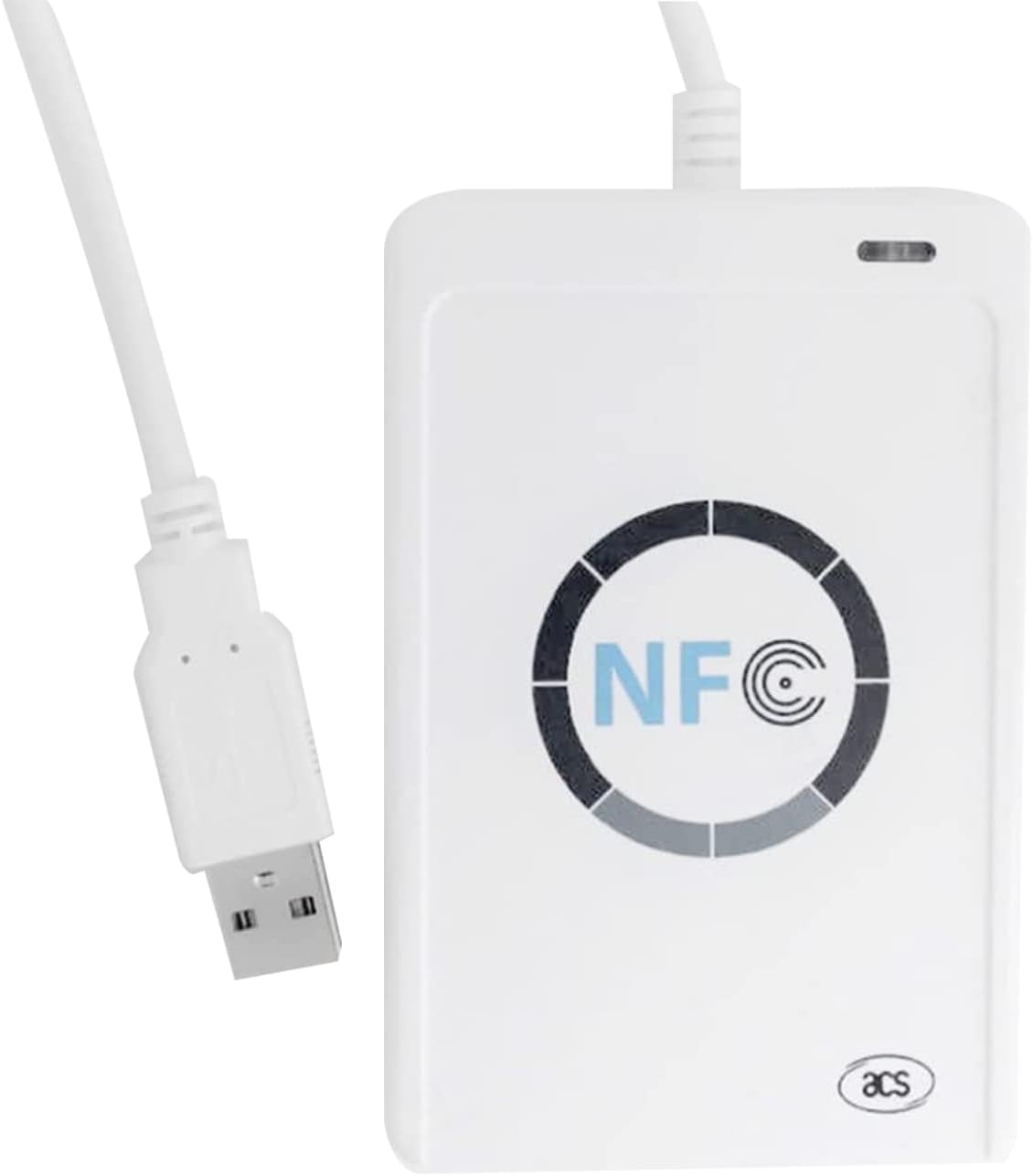 ACS ACR122U NFC Reader — ~$40. Reads MIFARE DESFire, NTAG, MIFARE Classic. Cannot read HID iCLASS (proprietary key diversification). The standard reader for open-standard access control development.
— Check Price on Amazon
ACS ACR122U NFC Reader — ~$40. Reads MIFARE DESFire, NTAG, MIFARE Classic. Cannot read HID iCLASS (proprietary key diversification). The standard reader for open-standard access control development.
— Check Price on Amazon
When to Choose HID iCLASS
✔ Choose HID iCLASS if…
- Your building already uses HID readers. The cost of replacing all readers is far higher than the card cost. If you are locked into HID, iCLASS (or iCLASS Seos for AES) is the path of least resistance.
- You need HID's managed reader ecosystem. HID's VertX and Mercury panels integrate natively with iCLASS. If your ACS backend is HID-based, switching card technology requires a reader swap.
- You want a single-vendor solution. HID provides cards, readers, panels, and software as a unified stack. For some organizations, that integration is worth the lock-in.
- You require Seos-level encryption. iCLASS Seos uses AES-128 with NIST SP 800-108 key derivation — comparable to DESFire EV3 security, but still within the HID ecosystem.
When to Choose MIFARE DESFire
✔ Choose MIFARE DESFire if…
- You are building a new system or migrating from older MIFARE Classic. DESFire EV3 is the natural upgrade path with open documentation and no vendor lock-in.
- You want reader independence. Any ISO 14443A reader works. You can buy from ACS, Identiv, Infineon, or build your own — no licensing required.
- You need multi-application cards. DESFire natively supports multiple applications on one card (e.g., door access + transit pass + time attendance), each with independent keys.
- You are a government or transit agency. The Dutch government's Rijkspas card, London's Oyster card, and many national ID programs use DESFire because the open standard enables competitive bidding among multiple reader vendors.
- You want to use open-source development tools. libfreefare, pyscard, and full APDU documentation let you prototype and test without NDAs.
Migration: From iCLASS to DESFire
If you are locked into HID and want to migrate to DESFire, the path is:
- Install dual-technology readers that read both iCLASS and DESFire (HID and several partners make these). This lets you phase in DESFire cards without replacing all readers at once.
- Issue dual-technology cards to users during the transition period (iCLASS + DESFire on one card). These cost more but allow gradual migration.
- Update the ACS backend to support DESFire key diversification (ANSI X9.17). This is a software change, not hardware.
- Disable iCLASS readers once all users have DESFire cards. Replace with DESFire-only readers to eliminate the proprietary dependency.
Related Comparisons
- MIFARE Classic vs DESFire vs Ultralight — the full NXP MIFARE family compared
- MIFARE Plus vs DESFire — the two AES-secured NXP access card families
- ISO 14443 vs ISO 15693 — the underlying RF standards compared
- MIFARE Access Bits Calculator — compute sector trailer access conditions
Summary
MIFARE DESFire EV3 is the open-standard choice with full documentation, universal reader compatibility, native multi-application support, and no vendor lock-in. It is the preferred technology for new deployments and government/transit systems where competitive procurement is required.
Want to work with DESFire cards in development? Try our APDU Builder to construct the DESFire SELECT/CREATE_APP/READ_DATA commands, or the ISO 7816 Filesystem Explorer to understand the DF/EF structure.